Pest control service Lynchburg operations address urgent structural breaches and insect colonies using targeted elimination methods rather than generic, surface-level baseboard treatments. Technicians isolate pest intrusion pathways along stone foundations, crawlspaces, and roof junctions common to Central Virginia architecture.
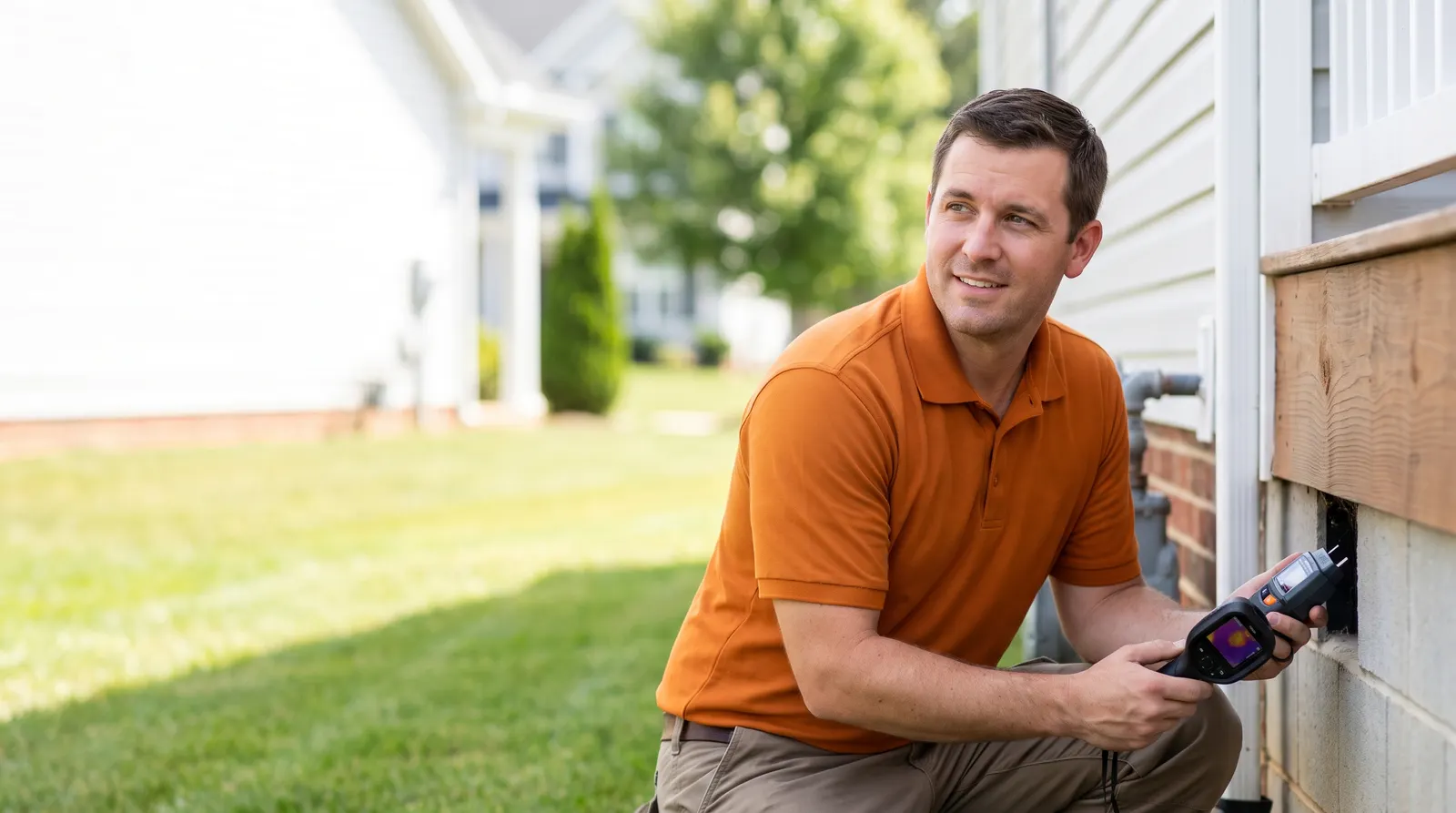
A professional pest control service in Lynchburg is a specialized environmental management service that inspects, identifies, neutralizes, and physically excludes biological pests from residential structures and commercial properties throughout the independent city and neighboring Piedmont counties.
Every service reflects the same meticulous attention to detail, whether it's a single job or a larger pest control service project across Lynchburg.
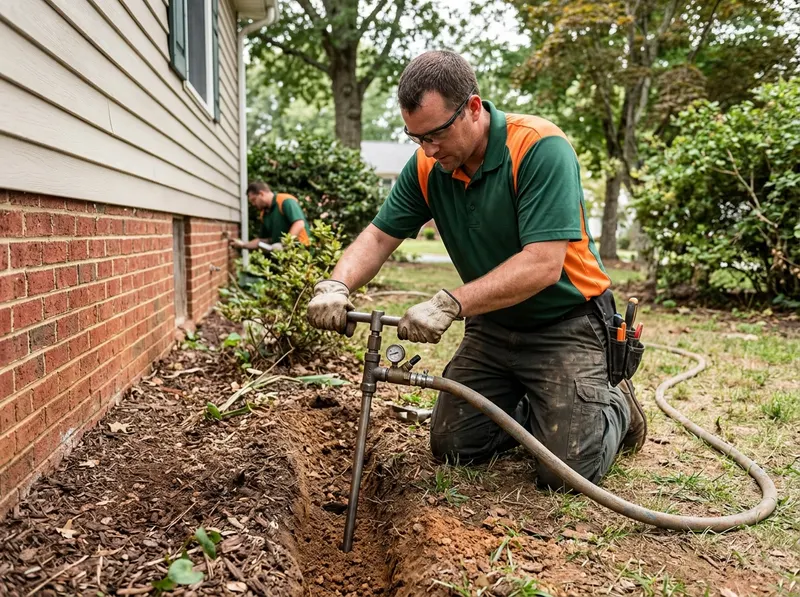
Soil-applied non-repellent termiticides and active structural wood treatments eliminate subterranean termite colonies feeding on sill plates, floor joists, and subflooring before irreversible framing damage occurs. Technicians trench foundation margins to depths of 6 inches and rod-inject termiticide into critical soil zones beneath porches, slabs, and crawlspace footings. The chemistry binds directly to clay soil particles, creating an undetectable lethal perimeter that foraging termites track through the subterranean nest via social grooming. For historic homes along Rivermont Avenue where trenching near historic shrubbery requires protection, targeted low-pressure rod injections safeguard sensitive roots while establishing an uninterrupted barrier against Reticulitermes flavipes.
Get a quote →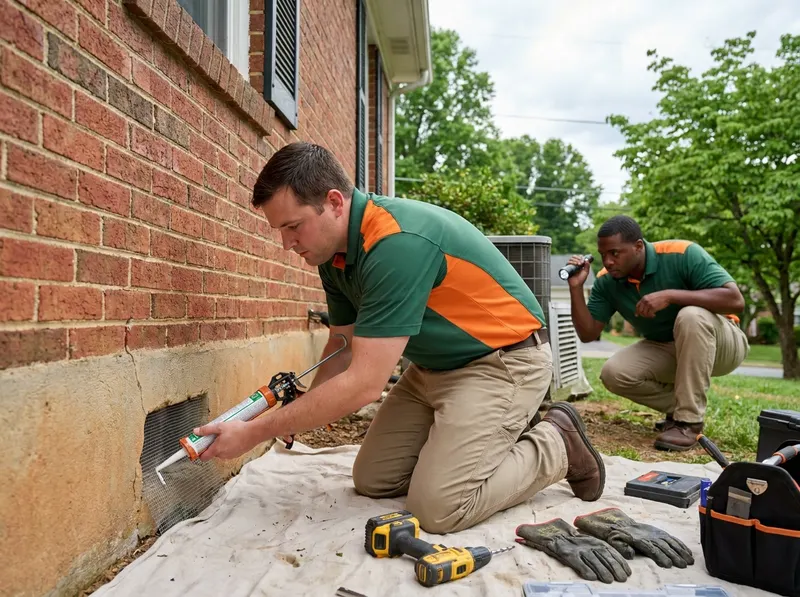
Trapping protocols remove Norway rats, roof rats, and house mice, paired with permanent installation of 0.25-inch galvanized steel wire mesh across crawlspace vents, soffit openings, and pipe penetrations. Technicians systematically trace thermal escape routes, grease rub marks, and droppings across utility raceways, floor transitions, and foundation stone ledges. Interior snapping mechanisms and localized capture runs clear nesting rodents from crawlspaces and attics within 72 to 96 hours without risk of carcasses decaying inside inaccessible wall cavities. Heavy copper wire mesh and non-shrink masonry mortars seal masonry weep holes, HVAC conduit chases, and exterior sill gaps against future autumn recolonization.
Get a quote →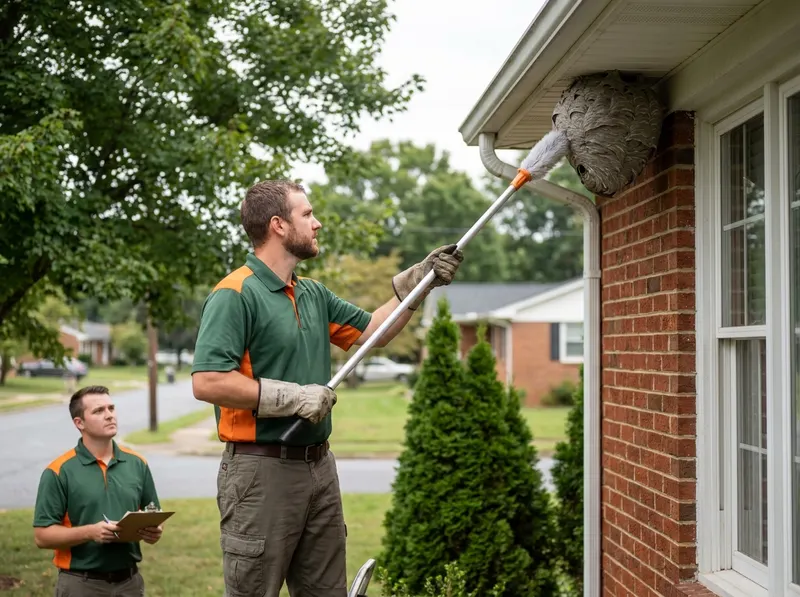
Curative neutralization and physical extraction of aerial bald-faced hornet nests, paper wasp comb clusters, and subterranean yellowjacket colonies from exterior eaves, chimneys, and landscaping beds. Treatments deploy targeted pyrethroid contact aerosols and pressurized micro-encapsulated dust formulations directly into the primary nest aperture during evening or early-morning low-activity intervals. Technicians thoroughly detach and haul away the abandoned paper comb structures to eliminate secondary scavenging by carpet beetles and ants. For nests located within attic vents, structural soffits, or wall voids near roof gables, specialized perimeter void injection prevents disoriented workers from penetrating living areas during removal.
Get a quote →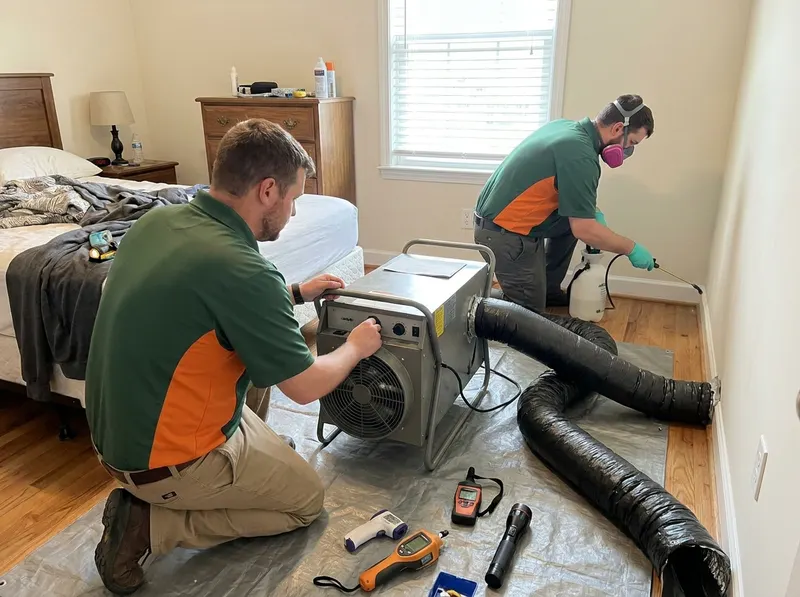
Targeted applications combining micro-encapsulated residuals, non-synthetic desiccant dusts, and insect growth regulators directly into mattress seams, baseboards, and wall voids to eliminate all life stages. The protocol targets adult Cimex lectularius, developing nymphs, and protected viable eggs tucked deep within screw holes, box spring framing, and behind electrical faceplates. Technicians avoid broadcast carpet soaking, utilizing high-precision crack-and-crevice tip attachments to lay down amorphous silica dust barriers that physically abrade the insect's protective waxy epicuticle. Follow-up diagnostic sweeps performed 14 to 21 days after initial intervention verify that newly hatched second-generation nymphs have been intercepted before reaching reproductive maturity.
Get a quote →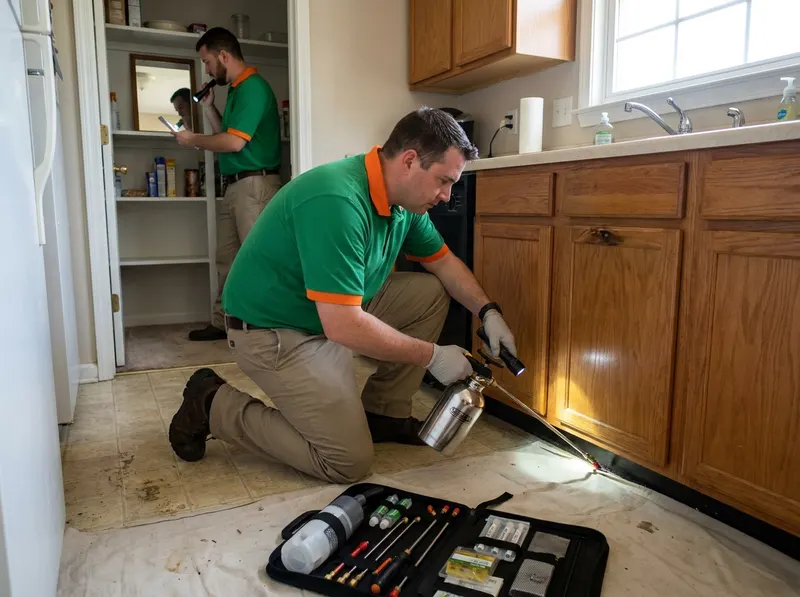
Focused gel-bait placements, insect growth regulators, and void flushing eliminate active German cockroach harborages inside kitchens, bathrooms, and utility access panels without wide-scale chemical broadcasting. Technicians systematically map aggregation points beneath sink basins, behind commercial refrigeration motors, within microwave chassis, and inside hollow cabinet hinges. Specialized insect growth regulators (IGR) arrest juvenile molting processes, rendering breeding females sterile while high-palatability abamectin or indoxacarb baits encourage horizontal transfer throughout the aggregation via coprophagy and emetophagy. Comprehensive sanitation guidance and gap-sealing recommendations stop re-introduction vectors common to multi-family rental buildings and older food preparation areas.
Get a quote →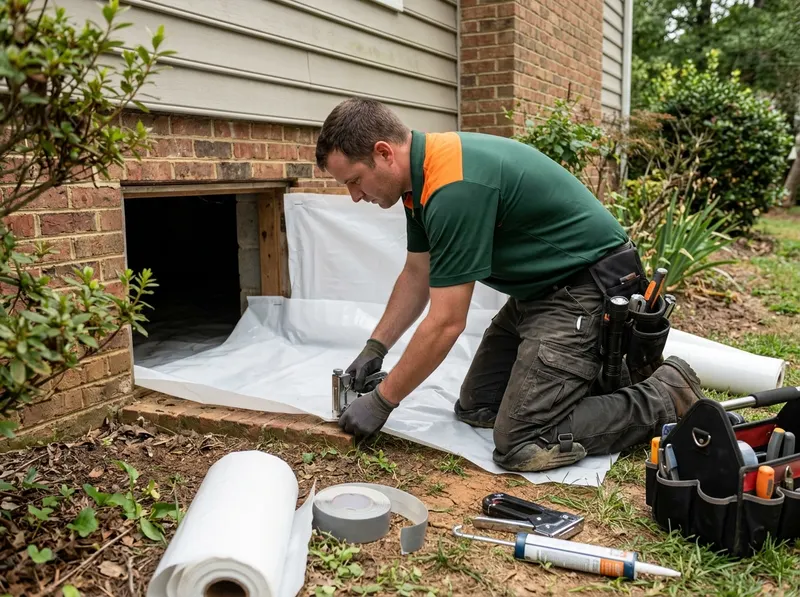
Installation of 10-to-15-mil continuous vapor retarders, foundation vent repairs, and targeted antimicrobial borate applications eliminate the high-humidity harborage necessary for wood-boring beetles and camel crickets. Unmitigated crawlspace moisture in Piedmont river basins routinely pushes wood moisture levels above 18 percent, inviting powderpost beetles and fungal decay. Technicians level ground soil, seal foundation piers, tape overlapping vapor seams, and spray exposed timber joists with concentrated disodium octaborate tetrahydrate. This dual mechanical and chemical barrier denies camel crickets dark damp shelters, neutralizes fungal food supplies, and permanently prevents wood-boring beetle larvae from completing their life cycle inside structural framing.
Get a quote →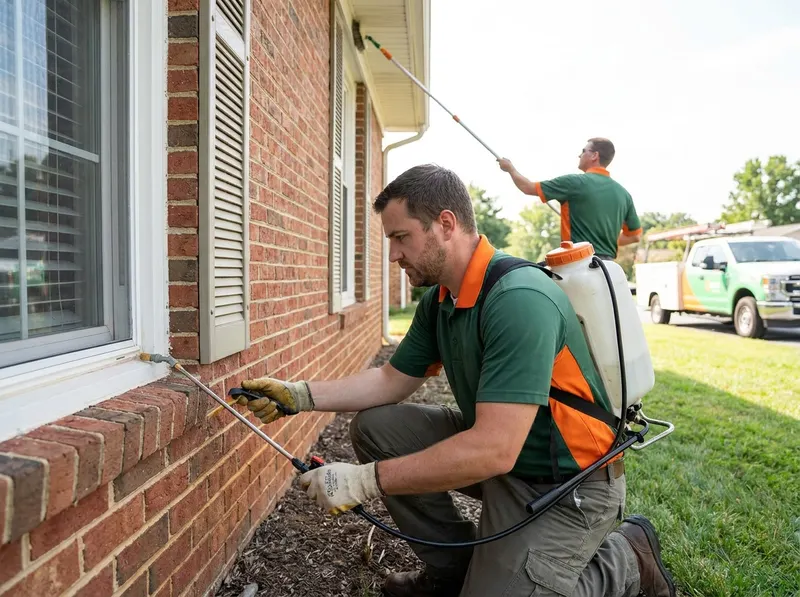
Late-summer exterior barrier applications and silicone-based caulk sealing along roof ridge caps, window casings, and vinyl cladding seams prevent brown marmorated stink bugs and boxelder bugs from entering attics. Starting in mid-September, these agricultural pests respond to shortened photoperiods by seeking thermal shelter on sun-warmed southern and western residential exposures. Technicians mist exterior roof-wall intersections, dormer flashings, and gable vents with UV-stable micro-encapsulated pyrethroids that remain active on exterior building materials for 60 to 90 days. Concurrently, workers fill structural gaps around exterior trim, window frames, and siding J-channels with durable polyurethane sealants, blocking the exact entry voids bugs use to access attic insulation.
Get a quote →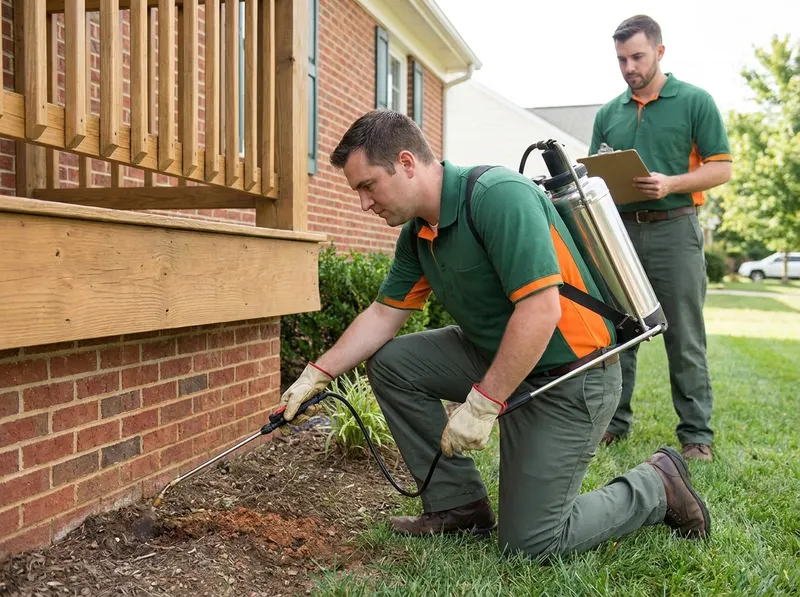
Species-specific non-repellent systemic baiting targeting the reproductive queens of carpenter ants, odorous house ants, and pavement ants nesting in wall voids or exterior mulch beds. Rather than using contact repellent sprays that inadvertently cause satellite budding in odorous house ant colonies, technicians select slow-acting metabolic toxins suspended in protein or carbohydrate gel matrices. Foraging worker ants ingest and transport the carrier chemistry back to deep subterranean or wall-void brood chambers, feeding the egg-laying queen through trophallaxis. For wood-excavating carpenter ant satellite nests located in damp window lintels or porch headers, direct borate void injections destroy structural colonies without requiring wall dismantling.
Get a quote →You get a firm, itemized quote for your pest control service before any work begins, no surprises, no pressure.
Careful prep, tidy work, and a full cleanup when we are done. We treat your home and belongings like our own.
The same trusted, background-checked team from the first call to the final check.
Selecting appropriate structural remediation depends on pest biology, building architecture, and the longevity of physical barriers. If an active wood-destroying insect infestation threatens structural framing, liquid non-repellent termiticide barriers applied along foundation footings provide ten or more years of continuous perimeter soil defense, whereas standalone localized bait stations require ongoing quarterly inspection cycles to monitor colony feeding patterns. The trade-off is higher initial application time and minor trenching disturbance versus ongoing perimeter monitoring logistics.
25-inch galvanized hardware cloth, and metal flashing across weeping holes and roof eaves, permanently halts ingress, whereas recurring toxicant baiting merely depresses active populations while leaving structural entry points open to new autumn litters. If nuisance invaders such as German cockroaches or bed bugs infest interior living spaces, targeted crack-and-crevice residual insect growth regulators and high-heat protocols eradicate resistant life stages in fewer treatments, whereas standard perimeter spray routes leave interior egg cases intact. For historic brick foundations in Federal Hill or Diamond Hill, low-pressure micro-injections preserve aged lime mortar, whereas modern poured concrete foundations in Wyndhurst permit standard sub-slab injection pressures.
Homeowners managing chronic subterranean dampness must combine physical crawlspace encapsulation, including 10-mil to 15-mil continuous poly vapor barriers, with targeted perimeter treatments to control camel crickets and wood-boring beetles permanently, whereas standalone chemical spraying in wet crawlspaces fails within weeks due to rapid hydrolytic breakdown of active ingredients.
Every project gets a firm, written price after a free on-site visit. Ranges below for orientation.
Tell us about your pest control service job and we'll send a clear, written quote, usually the same day. Or just call and talk to a real Lynchburg pro.
(804) 807-9933Free estimates for Lynchburg & the surrounding area.
 Quervia Pest Elimination