Stinging insect nest removal addresses the acute defensive hazards posed by social hymenoptera nesting in proximity to human activity. In Lynchburg, spring queens emerge between April and May, establishing colonies…
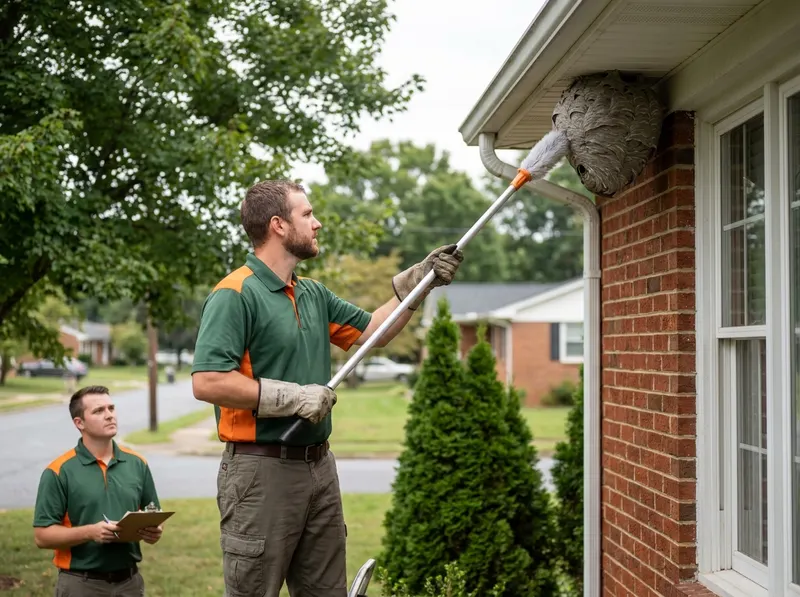
Stinging insect nest removal addresses the acute defensive hazards posed by social hymenoptera nesting in proximity to human activity. In Lynchburg, spring queens emerge between April and May, establishing colonies that peak in worker population from August through October. Paper wasps (Polistes) construct open-comb umbrella nests beneath the porch eaves and horizontal fascia boards of historic Victorians in Federal Hill, Diamond Hill, and Rivermont. In contrast, aerial yellowjackets and bald-faced hornets construct expansive, enclosed carton envelopes suspended high in deciduous canopy branches or beneath third-story soffits. Underground yellowjacket nests frequently colonize abandoned rodent burrows in the red clay soils of Boonsboro and Fort Hill, presenting severe sting hazards during routine lawn maintenance.
Effective intervention relies on targeted chemical knockdown combined with absolute physical removal of the nest matrix, rather than blind surface spraying. Standard consumer pyrethroid sprays frequently scatter colony members or drive defensive subterranean wasps into interior living areas through unsealed plumbing penetrations. A decisive protocol uses direct micro-injection of non-repellent residual dusts or concentrated knockdown foams into the primary nest entrance. This process neutralizes active foragers within 20 to 60 minutes. Once field activity ceases, technicians detach the paper structure and scrape adhesive attachment points clean. This step removes biological aggregation pheromones that attract secondary queens seeking established nesting territory during the subsequent spring cycle.
When colonies invade wall voids, soffit boxes, or chimney flues, a frequent issue across newer multi-story construction in Wyndhurst and Cornerstone, physical extraction involves targeted structural entry. Leaving a dead colony inside an enclosed wall void invites severe secondary infestations of dermestid carpet beetles, blowflies, and structural staining from rotting brood combs. Following void evacuation, structural entry gaps, loose trim boards, and weeping masonry seams are measured and sealed using copper mesh and weather-resistant elastomeric sealants. Technicians execute all exterior applications in compliant protective gear without locking property owners into ongoing monthly chemical contracts, targeting root-cause exclusion over repetitive chemical exposure.
Every job gets a firm, written price after a free on-site visit.
Tell us about your stinging insect nest removal job in Lynchburg and we'll send a clear, written quote, usually the same day.
 Quervia Pest Elimination